
 The Vee-Jay Story, Page 4
 It would be nice to be able to say that all the Vee Jay material recorded after a certain date was done in
stereo. It would even be nice to be able to say that you could believe the stereo markings on the front of
a Vee Jay album. I'd even settle for saying that two "stereo" copies of the same album will have the
same stereo content! But all I can say is, "what a mess!"
It would be nice to be able to say that all the Vee Jay material recorded after a certain date was done in
stereo. It would even be nice to be able to say that you could believe the stereo markings on the front of
a Vee Jay album. I'd even settle for saying that two "stereo" copies of the same album will have the
same stereo content! But all I can say is, "what a mess!"
 Murray Allen: "We had two studios, Studio A and Studio B. The recording business in the fifties
was really funny. We would be recording somebody in Studio A and if they had a hot tune, some other
company would call up before the session was over and ask that the musicians go next door to the other
studio when they were finished and lay down the same thing so the second company could have their
own singer do the same song. At that time, the time between recording and release of a record was
sometimes only a few days, so we recorded a lot of songs that were copies of others, and had a lot of
people running around doing rush recording sessions."
Murray Allen: "We had two studios, Studio A and Studio B. The recording business in the fifties
was really funny. We would be recording somebody in Studio A and if they had a hot tune, some other
company would call up before the session was over and ask that the musicians go next door to the other
studio when they were finished and lay down the same thing so the second company could have their
own singer do the same song. At that time, the time between recording and release of a record was
sometimes only a few days, so we recorded a lot of songs that were copies of others, and had a lot of
people running around doing rush recording sessions."
 Calvin Carter: "Not much, it would usually depend on the size of the band I was using. Usually I
did my blues things, because at the time it wasn't a big deal to have stereo, in Studio B (no stereo), and
sometimes I would even use Studio C, which was a very small studio with an intimate sound. I'd do my
larger arrangements in Studio A, which was a very big studio. After awhile, when stereo became a force,
we went back and ran a lot of our old masters through another studio to give it another sound, we used
to call it pseudo-stereo."
Calvin Carter: "Not much, it would usually depend on the size of the band I was using. Usually I
did my blues things, because at the time it wasn't a big deal to have stereo, in Studio B (no stereo), and
sometimes I would even use Studio C, which was a very small studio with an intimate sound. I'd do my
larger arrangements in Studio A, which was a very big studio. After awhile, when stereo became a force,
we went back and ran a lot of our old masters through another studio to give it another sound, we used
to call it pseudo-stereo."
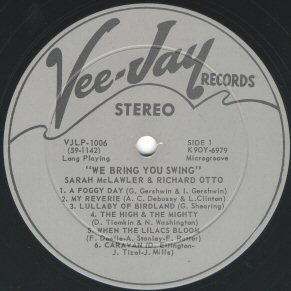 The first stereo album put out on Vee Jay was We Bring You Love, by Sarah McLawler and
Richard Otto [Vee Jay SR-1003], mastered in 1957! From there, several of the following albums were
also stereo, especially the jazz albums. Jazz A&R chief Sid McCoy remarked:
The first stereo album put out on Vee Jay was We Bring You Love, by Sarah McLawler and
Richard Otto [Vee Jay SR-1003], mastered in 1957! From there, several of the following albums were
also stereo, especially the jazz albums. Jazz A&R chief Sid McCoy remarked:
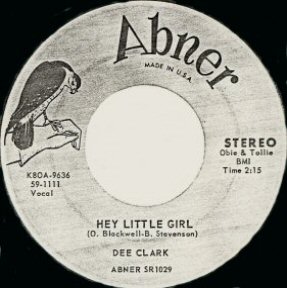
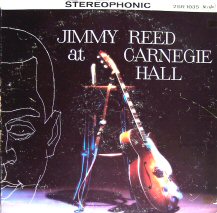 Except for the jazz albums and the Dee Clark albums on Abner, there weren't many hits in stereo on
Vee-Jay until the Jimmy Reed at Carnegie Hall album [SR-1035] in 1961. Several of the songs
from his previous album, Found Love [LP-1022], appear on the Carnegie Hall album in
stereo, including "Baby What You Want Me to Do," "Found Love," "Big Boss Man," and "Hush-Hush."
Surprisingly, "Take Out Some Insurance", originally on the Rockin' with
Reed album, was also true stereo. In addition, there was a second disc of newly recorded songs,
including "Bright Lights, Big City," all in true stereo.
Except for the jazz albums and the Dee Clark albums on Abner, there weren't many hits in stereo on
Vee-Jay until the Jimmy Reed at Carnegie Hall album [SR-1035] in 1961. Several of the songs
from his previous album, Found Love [LP-1022], appear on the Carnegie Hall album in
stereo, including "Baby What You Want Me to Do," "Found Love," "Big Boss Man," and "Hush-Hush."
Surprisingly, "Take Out Some Insurance", originally on the Rockin' with
Reed album, was also true stereo. In addition, there was a second disc of newly recorded songs,
including "Bright Lights, Big City," all in true stereo.
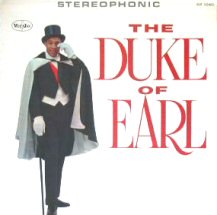 Then came the blockbuster, SR-1040, The Duke of Earl by Gene Chandler. Very few copies of
the stereo album were sold, making it a true rock and roll rarity. The album is all true stereo, with a
wonderful pressing that makes the sound breathtaking in its original stereo. Unfortunately, the stereo
master has long since disappeared, and reissues with the stereophonic banner on the front cover have
all been mono pressings inside. The original stereo pressing has "XCSV-82329-1C" mechanically
stamped in the trailout wax of side one, and the matrix number corrected to "82339" by hand. The back
cover slick also has a blurb at the top that starts "Important notice...This is a stereophonic record" (see
above).
Then came the blockbuster, SR-1040, The Duke of Earl by Gene Chandler. Very few copies of
the stereo album were sold, making it a true rock and roll rarity. The album is all true stereo, with a
wonderful pressing that makes the sound breathtaking in its original stereo. Unfortunately, the stereo
master has long since disappeared, and reissues with the stereophonic banner on the front cover have
all been mono pressings inside. The original stereo pressing has "XCSV-82329-1C" mechanically
stamped in the trailout wax of side one, and the matrix number corrected to "82339" by hand. The back
cover slick also has a blurb at the top that starts "Important notice...This is a stereophonic record" (see
above).
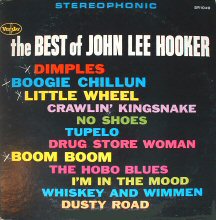
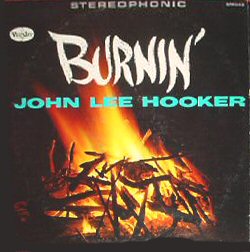 Another stereo master that has rarely turned up is the stereo version of SR-1043, John Lee Hooker's
Burnin' album, which has the stereo version of his hit, "Boom Boom." The stereo master of his
Best of John Lee Hooker package, SR-1049, is another one whose stereo master whereabouts
are unknown, since the 1970s reissue is mono in the stereo cover. In fact, we have yet to locate a
stereo copy of the original SR-1049, so we can't even report which songs were really stereo on that
album. The other two Best Of packages issued around the same time, for Dee Clark [SR-1047]
and Jerry Butler [SR-1048] are predominately true stereo, including a true stereo alternate take of "For
Your Precious Love" by Jerry Butler & the Impressions on the latter. From this point, the Jimmy Reed
albums [SR-1050 and beyond], and there were many, were all in stereo, as were John Lee Hooker's
albums.
Another stereo master that has rarely turned up is the stereo version of SR-1043, John Lee Hooker's
Burnin' album, which has the stereo version of his hit, "Boom Boom." The stereo master of his
Best of John Lee Hooker package, SR-1049, is another one whose stereo master whereabouts
are unknown, since the 1970s reissue is mono in the stereo cover. In fact, we have yet to locate a
stereo copy of the original SR-1049, so we can't even report which songs were really stereo on that
album. The other two Best Of packages issued around the same time, for Dee Clark [SR-1047]
and Jerry Butler [SR-1048] are predominately true stereo, including a true stereo alternate take of "For
Your Precious Love" by Jerry Butler & the Impressions on the latter. From this point, the Jimmy Reed
albums [SR-1050 and beyond], and there were many, were all in stereo, as were John Lee Hooker's
albums.
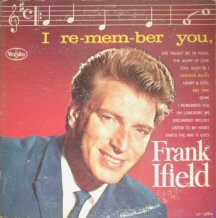 The Four Seasons albums, which started with Sherry [SR-1053], were generally in stereo, with a
few tracks being exceptions (see accompanying discography). In general, "New Mexican Rose" and
"Connie-O" did not appear in stereo. Another hard-to-find stereo hit is the original version of Frank
Ifield's "I Remember You, which was included in (2-track) stereo on the I Remember You album
[SR-1054] and also on the Beatles and Frank Ifield on Stage album [VJS-1085]. Aside from the
fairly rare stereo versions of these albwums, the original stereo version didn't show up until much later,
on CD. Ifield re-recorded the song and included it on countless albums in the 1960s and 1970s.
Introducing the Beatles [SR-1062] was stereo except for "Love Me Do" and "PS I Love You"
included on the first version of the LP.
The Four Seasons albums, which started with Sherry [SR-1053], were generally in stereo, with a
few tracks being exceptions (see accompanying discography). In general, "New Mexican Rose" and
"Connie-O" did not appear in stereo. Another hard-to-find stereo hit is the original version of Frank
Ifield's "I Remember You, which was included in (2-track) stereo on the I Remember You album
[SR-1054] and also on the Beatles and Frank Ifield on Stage album [VJS-1085]. Aside from the
fairly rare stereo versions of these albwums, the original stereo version didn't show up until much later,
on CD. Ifield re-recorded the song and included it on countless albums in the 1960s and 1970s.
Introducing the Beatles [SR-1062] was stereo except for "Love Me Do" and "PS I Love You"
included on the first version of the LP.
We would appreciate any additions or corrections to this story. Just send them to us via e-mail. Both Sides Now Publications is an information web page. We are not a catalog, nor can we provide the records mentioned below. We have no association with Vee-Jay Records. Should you be interested in acquiring Vee-Jay products (which are all out of print), we suggest you see our Frequently Asked Questions page and Follow the instructions found there. This story and discography are copyright 1981, 1993, 1997, 1999, 2006 by Mike Callahan. All rights reserved
 Back to the Vee-Jay Main Page
  Back to The Vee-Jay Story, Page 3
  On to The Vee-Jay International Story
 Back to the Discography Listings Page
Back to the Both Sides Now Home Page
Back to the Discography Listings Page
Back to the Both Sides Now Home Page